How to wear cufflinks: French cuffs, black tie and weddings
To wear cufflinks you need French or convertible cuffs. Fold the cuff, press the edges together, push the link through, face outside, then fasten the back.
Published , 4 min read
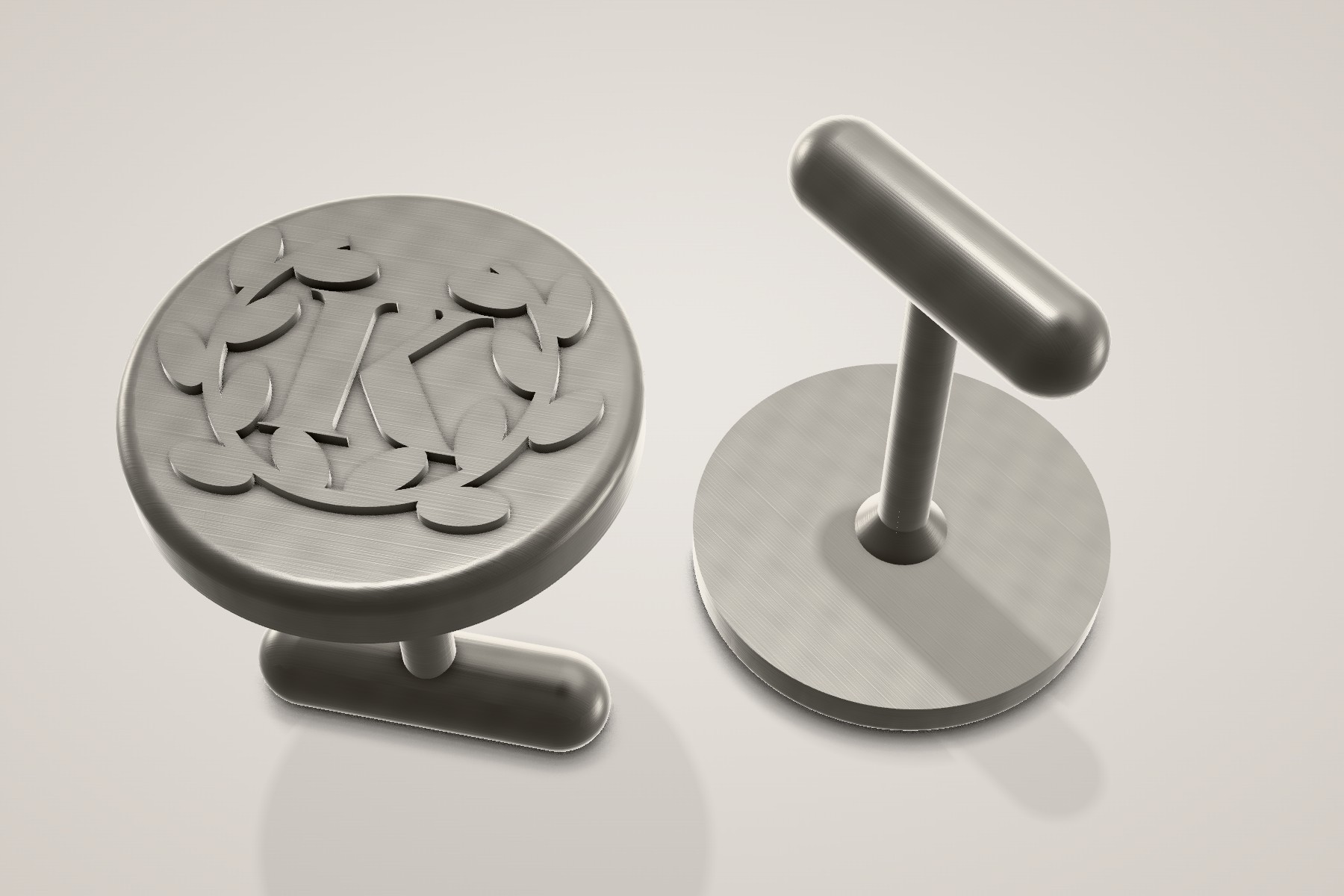
To wear cufflinks, you need a shirt with French (double) cuffs or convertible cuffs. Fold the cuff back, press the two edges together, push the cufflink through the buttonholes with its decorative face on the outside, then fasten the back.
That is the whole method. Below it is step by step, with the details that make it easy: which shirts work, which way the face points, and what to wear for black tie, a wedding and the office.
Shirts that take cufflinks
French cuffs, also called double cuffs, are made for cufflinks. The cuff folds back on itself, so the cufflink passes through four layers of cloth. There are no buttons.
Convertible cuffs take either buttons or cufflinks, so one shirt can do both jobs. They are single cuffs, so the link passes through two layers.
Button cuffs, the standard cuff on most shirts, have a buttonhole on one side and a button on the other. There is nowhere for a cufflink to go.
How to put on cufflinks, step by step
- Put the shirt on. Button the front and the collar before you start on the cuffs.
- Fold the cuff. Fold a French cuff back along its crease so that all four buttonholes line up.
- Bring the edges together. The usual style is "kissing": press the two edges of the cuff together so they line up and point out, away from your wrist.
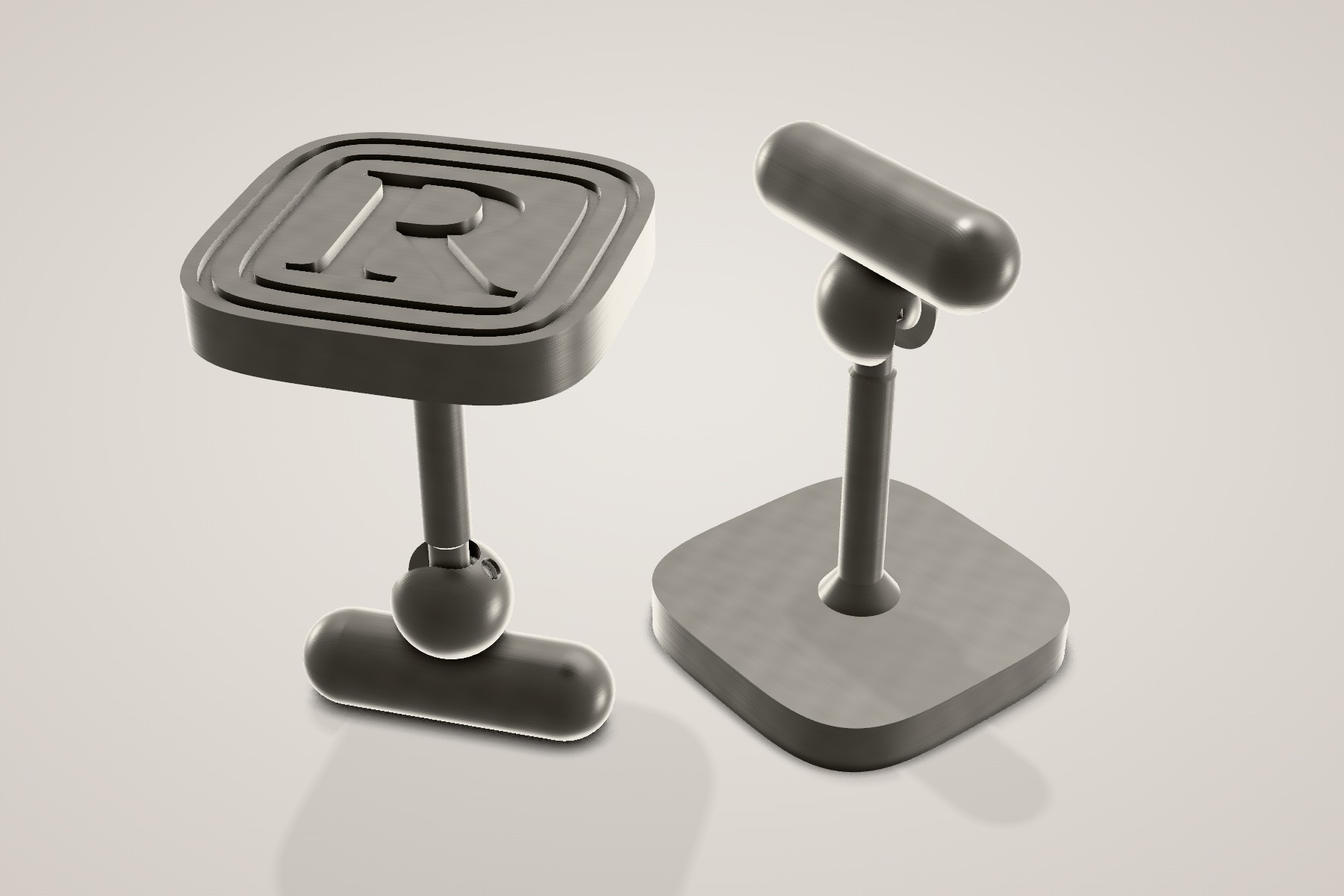
- Ready the back. Turn a bullet toggle in line with its post. For a bar back, tilt the bar so one end leads. For a fixed ball return, lead with the ball.
- Push it through. Starting from the side where the face will sit, feed the back through every buttonhole.
- Fasten it. Turn the bullet crosswise, let the bar settle across the cuff, or let the ball rest against the cloth. If your design has letters, turn the face so they sit upright.
- Do the second cuff. This is the awkward one, because you are working with your other hand. A bullet back makes it noticeably easier.
You can also wear French cuffs barrel style, with one edge overlapping the other as a buttoned cuff does and the link passing through both. It is less usual than kissing, but it works.
The back you choose makes the most difference to how easy this is. We compare the three in cufflink backs and who each one suits.
Which way the face points
The decorative face goes on the outside of the cuff, where it is seen. With your arms relaxed at your sides, that is the side facing away from your body. The back sits on the side facing in, out of sight.
A round or symmetrical face can sit any way round. A monogram, a word or a design with a clear top, such as a skyline, should be turned so it sits upright with your arm at rest.
Black tie cufflinks
Black tie usually calls for a dress shirt with French cuffs, so this is the evening when cufflinks are expected rather than optional. Restraint suits it: a dark or plain face of modest size sits better with a dinner jacket than anything bright or busy.
Our black titanium nitride, a deep graphite black with a metallic sheen, suits this kind of evening well. It is one of two Signature finishes, both explained in light gold and black titanium nitride. Satin titanium works too: its soft gray is quiet against a white dress shirt.
Cufflinks for a wedding
Cufflinks are a classic gift for a groom, and a good pair says something specific. In the studio you can add initials, a monogram or a short line of text to the face.
For the wedding party, every collection design is $150 a pair, so each groomsman's pair costs the same whichever design you choose. The groom's own pair can be a custom design, or a Signature pair in light gold or black.
Two practical points:
- Choose the back for the wearer. The bar back has nothing to come undone over a long day. For groomsmen who rarely wear cufflinks, the bullet back is the easiest to put on.
- Order in time. Every pair is made to order and ships in about 6 weeks. Allow for that, plus a margin, before the day.
Cufflinks for the office
Whether French cuffs suit your office depends on the office, but where they do, titanium is an easy choice. Tumbled satin titanium is a soft gray with a low sheen rather than a shine, it doesn't tarnish, and a pair weighs a little over 40% of the same pair in silver, so it is easy to forget you are wearing it.
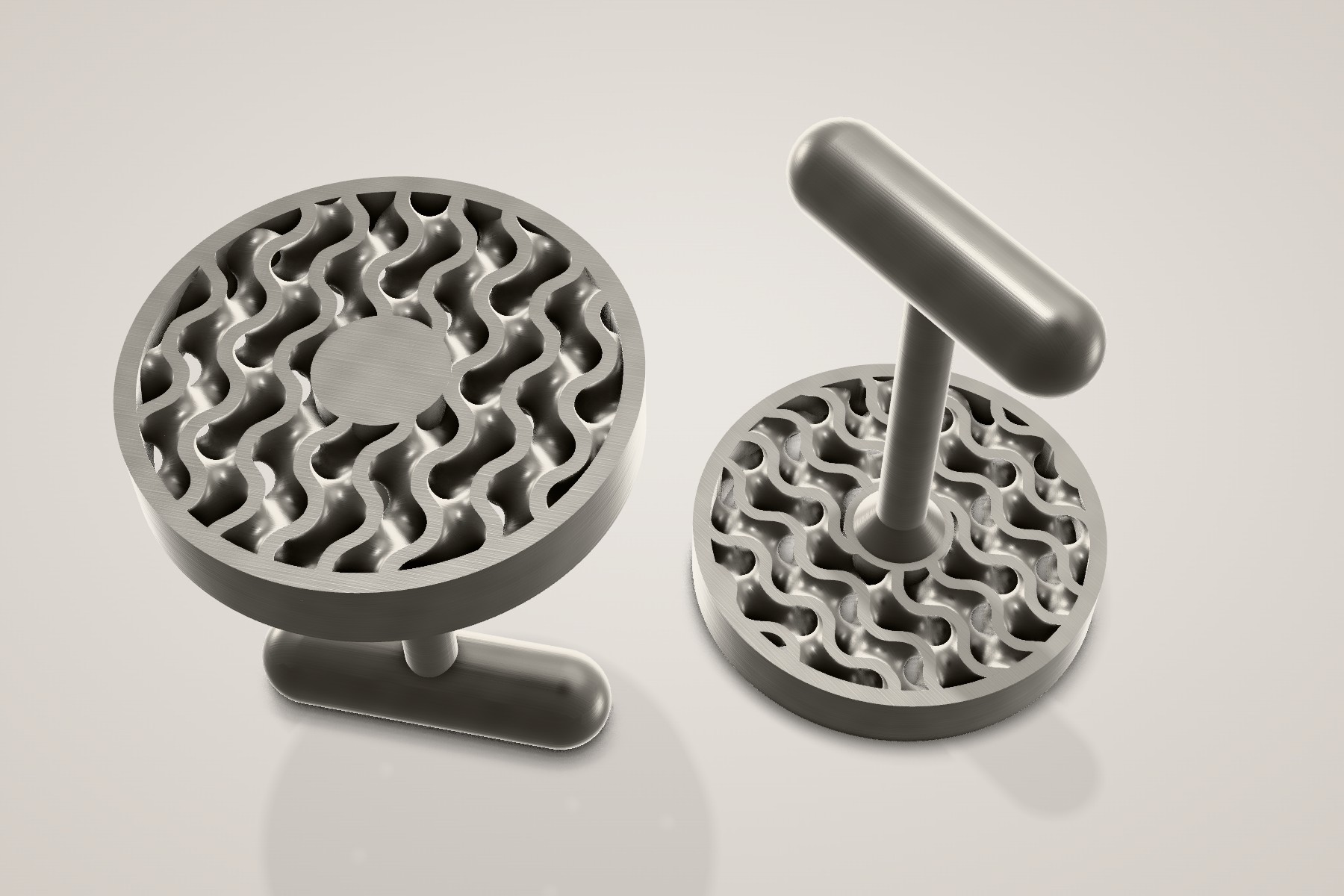
For desk days, the fixed ball return is the most comfortable back: a smooth, rounded end with nothing to catch. Quieter themes suit the office best: monograms, geometric lattices, architecture and skylines, golf and sailing.
Questions
Can you wear cufflinks with a regular shirt?
Only if it has French or convertible cuffs. A standard button cuff has no second buttonhole for the link to pass through.
Which way should cufflinks face?
The decorative face goes on the outside of the cuff, where it is seen. The back sits on the hidden side.
Do you need French cuffs for black tie?
Usually, yes. Black tie calls for a dress shirt with French cuffs.
When should I order cufflinks for a wedding?
Every pair is made to order and ships in about 6 weeks, so order at least that far ahead, with some time to spare.
Whether the pair is for you, a groom or a groomsman, you can design a pair in the studio: start from a collection design or a monogram, choose the back that suits the wearer, and the studio checks every line against the titanium rules before you order.