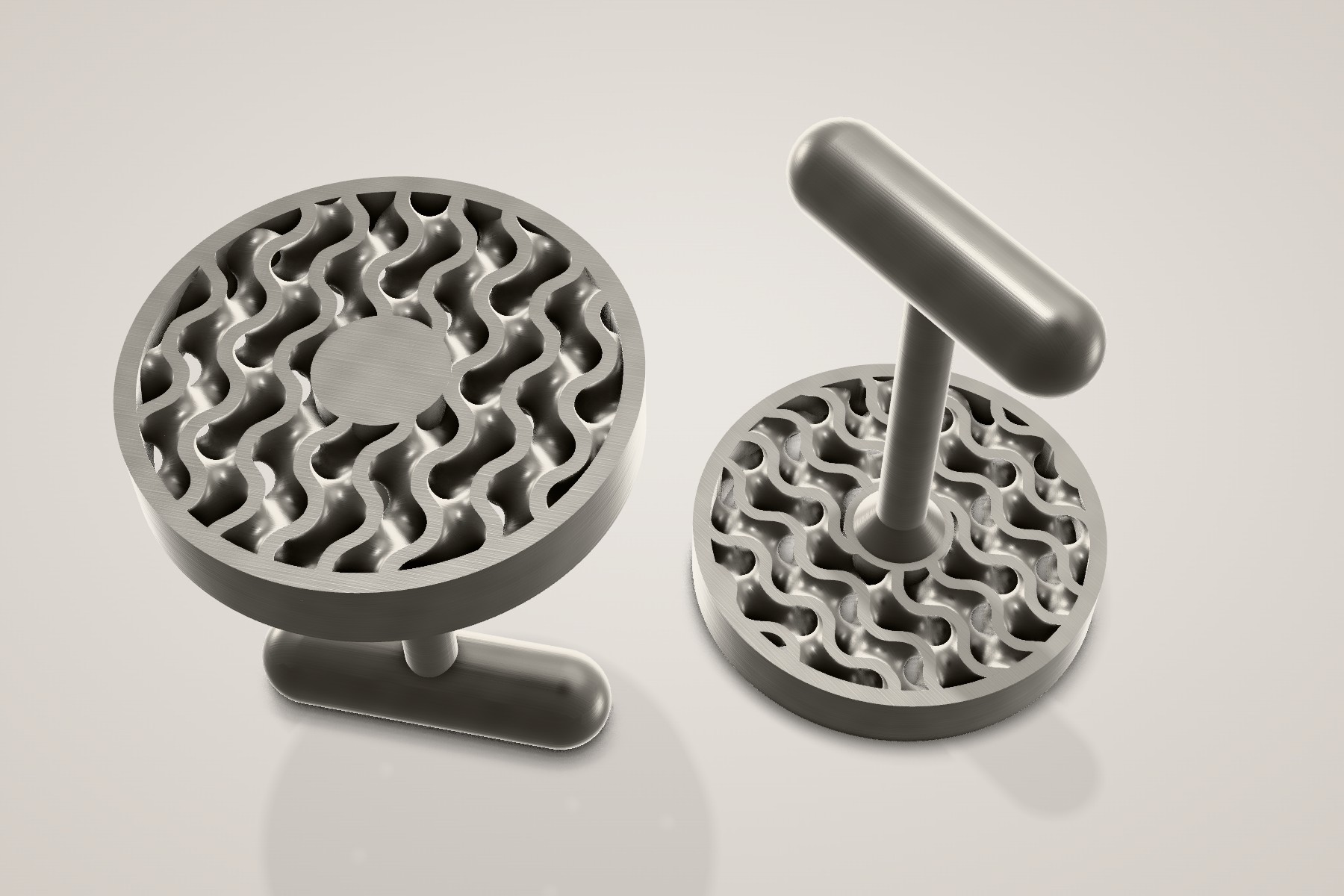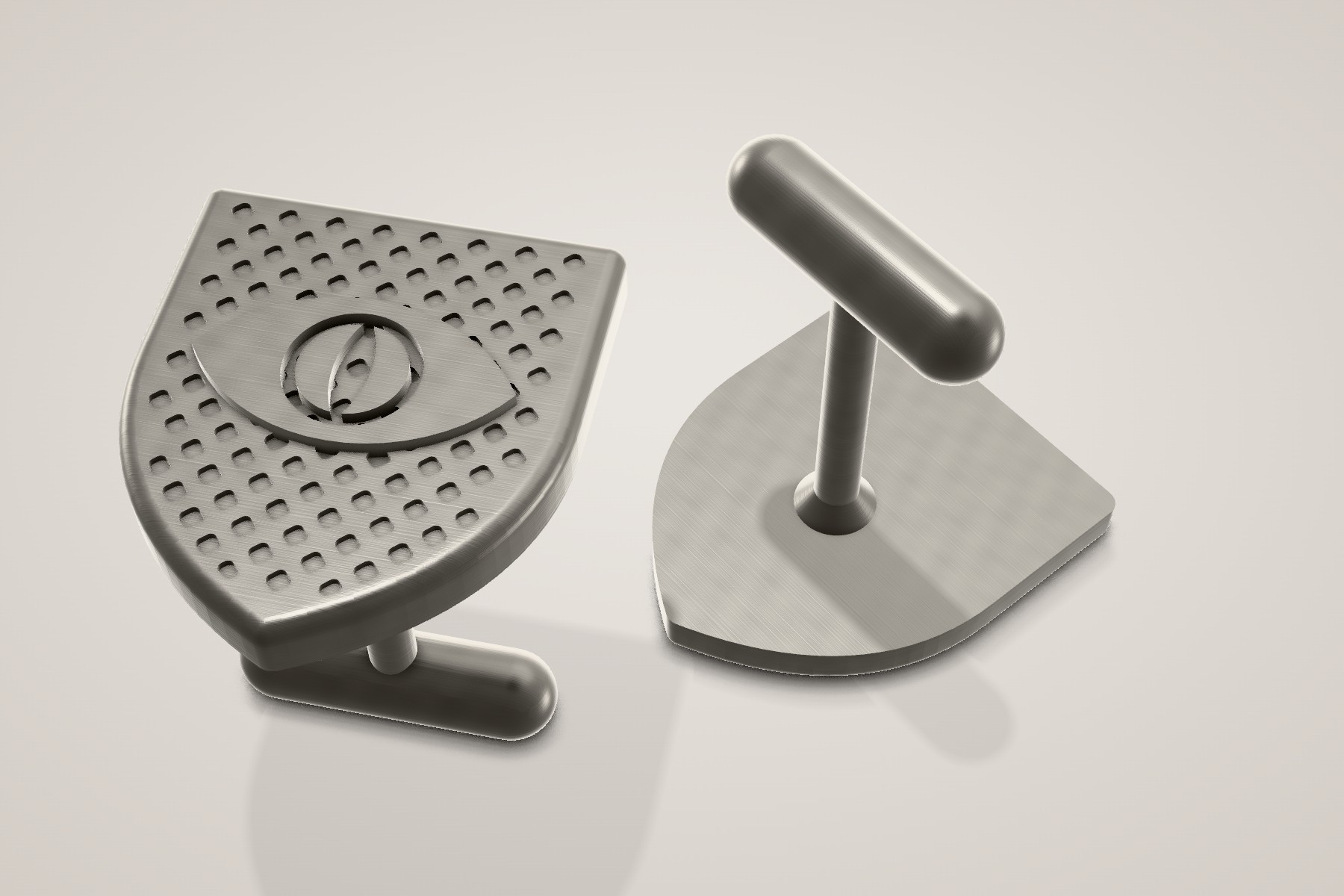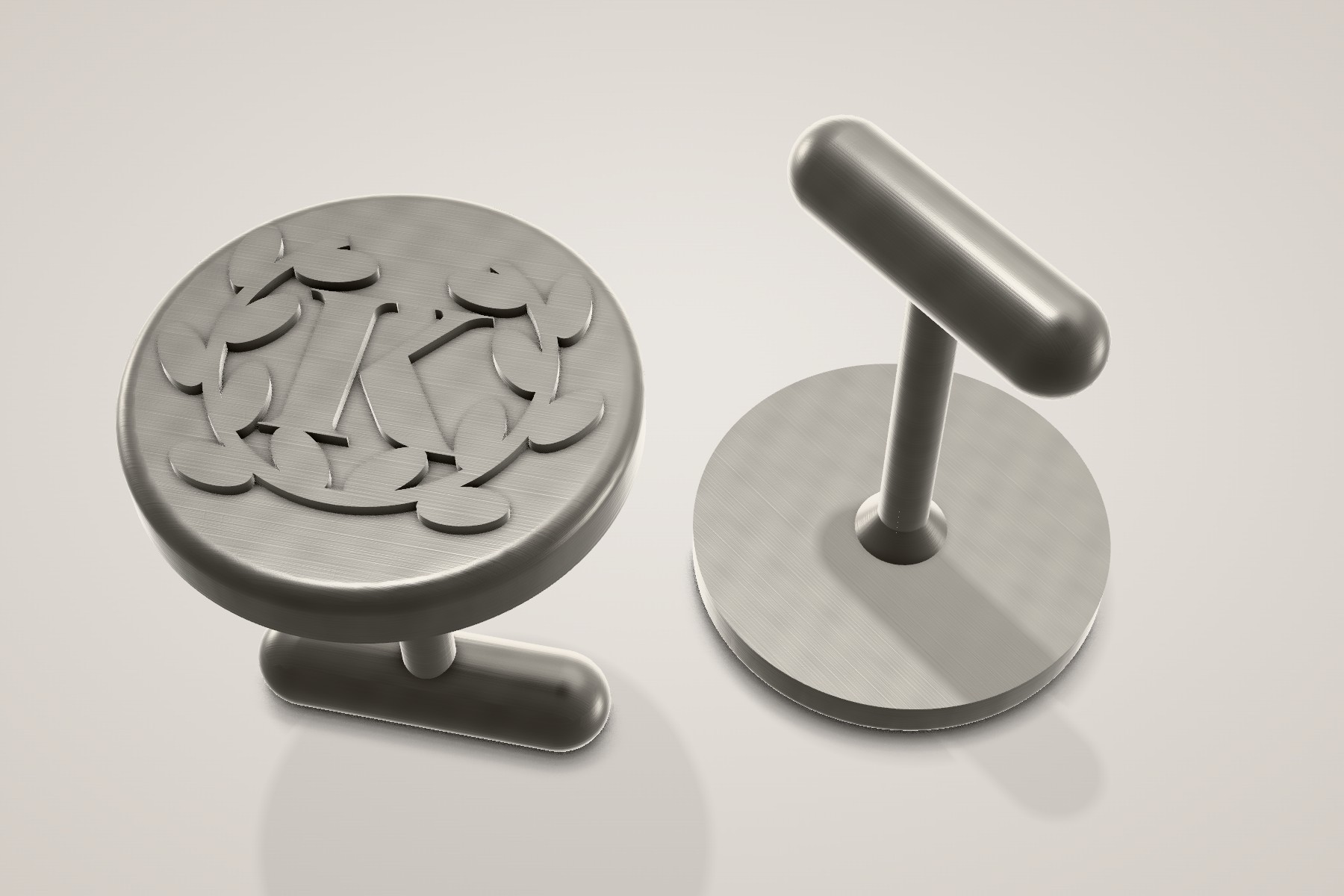
Cufflink backs: bullet, bar and fixed, and who each one suits
Cufflink backs differ in how they fasten: a bullet back is the easiest to put on, a bar back the most secure, and a fixed ball return the most comfortable.
Published , 4 min read
A cufflink back is the part that holds the link in your cuff, and the type you choose decides how easily it goes on and how it feels through the day. Choose a bullet back for the easiest fastening, a bar back for the most security, and a fixed ball return for the most comfort.
We print all three in Grade 5 titanium, each in one piece with the face. Below is how each one works, who it suits, and how the bullet back comes off the printer already assembled.
Types of cufflinks, by their backs
Cufflinks are usually described by the way they fasten. Besides the three below, you will see chain links, where two faces are joined by a short chain, and silk knots, made from knotted cord rather than metal.
These are the three we make:
| Back | How it works | Moving parts | Best for |
|---|---|---|---|
| Bullet | A bullet-shaped toggle swivels on a ball joint | One ball joint | The easiest to put on |
| Bar | A rigid T-bar | None | The most secure |
| Fixed | The post curves back and ends in a ball | None | The most comfortable |
Bullet back cufflinks: the easiest to put on
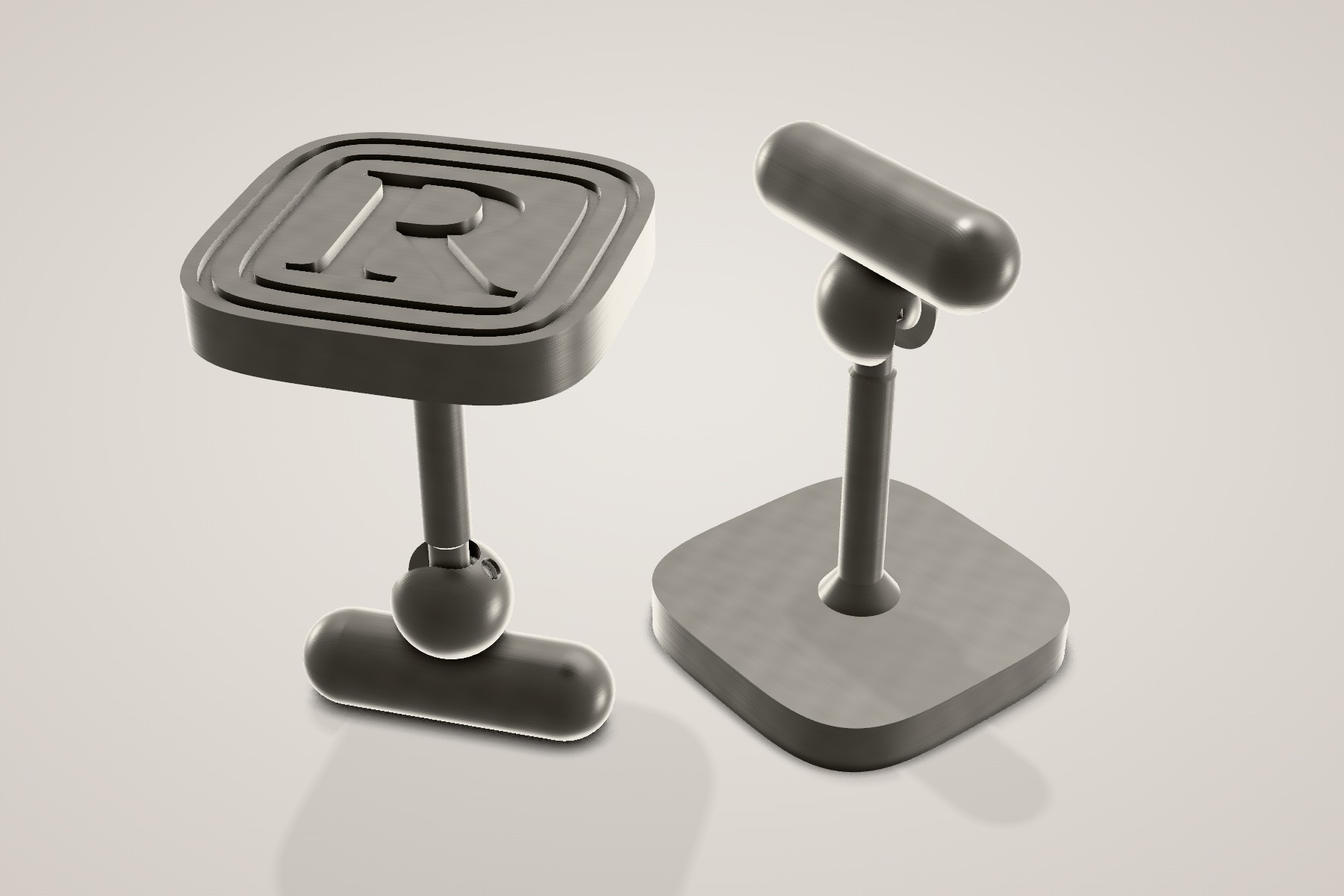
A bullet back has a short toggle, shaped like a bullet, that swivels on the end of the post. Turn the toggle in line with the post and it slides through the buttonholes like a needle. Turn it crosswise and it holds the cuff closed.
It suits:
- anyone fastening their own cuffs, especially the second cuff, which you do with your other hand;
- someone new to cufflinks;
- a gift, when you don't know the wearer's habits.
If you are buying a pair as a present and aren't sure which back to choose, the bullet is the safe default.
Printed already assembled
Swivel backs are usually made from separate parts joined with a pin or a rivet. Ours isn't assembled at all. The ball on the end of the post is printed inside its socket in the toggle, with a clearance of 0.3 mm on each side. Face, post, ball and toggle come off the printer as one piece, and the toggle swivels straight away.
A one-piece joint like this can't be cast or machined in one piece. A mold can't form a ball inside a socket that already wraps around it, and a cutting tool can't reach in to shape one. A printer builds the ball and the socket around it at the same time, one thin layer after another. There is more on the process in how 3D printed titanium cufflinks are made.
Bar back cufflinks: the most secure
A bar back ends in a rigid T-bar. Nothing moves, so nothing can turn back in line with the post and let the link slip out of the cuff.
To put one on, tilt the bar so that one end leads, feed it through the buttonholes, then let it settle across the far side of the cuff. It takes a little more practice than a bullet back.
It suits:
- someone who wears cufflinks often and has the knack;
- a groom, or anyone who wants to forget about their cuffs for a whole day;
- a wearer who prefers no moving parts at all.
Fixed back cufflinks: the most comfortable
Our fixed back is a ball return. The post curves back on itself and ends in a smooth ball, all in one rigid piece. There are no moving parts, and nothing at the end of the post but a rounded ball.
To put one on, lead with the ball: pass it through the buttonholes and the curved post follows, like threading a hook. The ball then rests against the cuff.
It suits:
- long days at a desk, when your cuffs rest on a keyboard or the edge of a table;
- everyday office wear;
- anyone who finds that a bar or a toggle catches on things.
How to choose
- Buying a gift and unsure? The bullet back. It is the easiest to put on.
- Buying for a groom? The bar back, which has nothing to come undone. If he rarely wears cufflinks, the bullet.
- Wearing them to the office most days? The fixed ball return, for comfort.
- Wearing them every week and know the knack? The bar, for security.
Choose with care, because the back can't be swapped later: it is printed in one piece with the face. That is the cost of one-piece construction. The benefit is that there is no joint between face and post to loosen.
For the fastening itself, step by step, see how to wear cufflinks with French cuffs. It also covers which way the face points and what suits black tie.
Questions
What is the easiest cufflink back to put on?
The bullet back. Turn the toggle in line with the post, push it through the buttonholes, then turn it crosswise.
Which cufflink back is the most secure?
The bar back. It is a rigid T-bar with no moving parts, so it can't swing back into line and slip out.
What is the difference between a bar back and a fixed back?
Both are rigid, with no moving parts. A bar back ends in a straight T-bar; our fixed back is a ball return, where the post curves back and ends in a ball.
Can I change the back later?
No. The back is printed in one piece with the face, so you choose it when you design the pair.
Pick a collection design or start from a blank face, then choose the shape, size and back in the studio. Every pair is printed to order in Grade 5 titanium and ships in about 6 weeks, with shipping included.